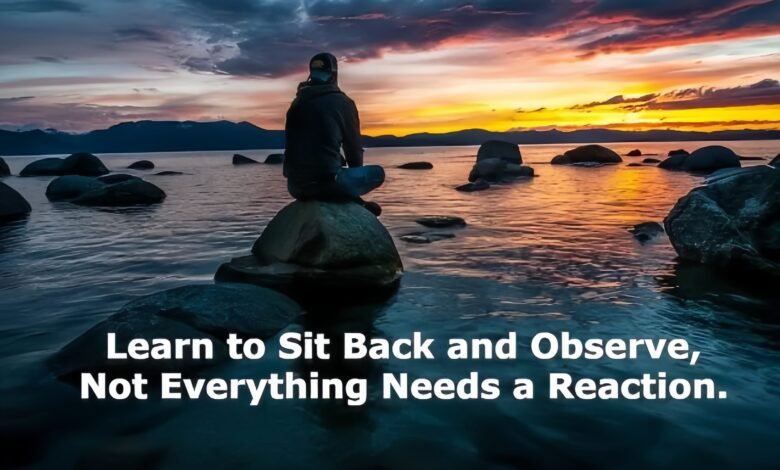
Hey there! Today, we’re diving into a valuable piece of advice from Tymoff: “Learn to sit back and observe. Not everything needs a reaction.” While it might seem puzzling initially, let’s unpack its significance. This counsel encourages calmness and thought. It suggests that not every situation needs an immediate response. By understanding this, we can see the power of thought over haste. Let’s explore why this perspective is crucial!
What does this advice mean?
First, let’s figure out what Tymoff is trying to tell us. Here’s what the advice means in simple terms:
1. “Learn to sit back”:
This means we should try to relax and not rush into things.
2. “Observe”:
This means to watch and listen carefully to what’s happening around us.
3. Not everything needs a reaction.
This part says we don’t always have to do or say something about everything.
So, Tymoff is telling us that it’s good to take our time, pay attention, and think before we act or speak.
Why Is This Advice Important?
You might be wondering why we’ve got to pay attention to this advice.
1. It helps us make better choices.
When we’ve taken time to watch and think, we often make smarter decisions.
2. It keeps us calmer.
Not reacting to everything helps us stay more relaxed and less stressed.
3. We learn more.
When we’ve observed, we can learn a lot about the world and people around us.
4. It helps in relationships.
Taking the time to understand others before reacting can make our friendships better.
5. We avoid mistakes.
Sometimes, quick reactions can lead to mistakes. Observing first can help us avoid them.
6. It makes us wiser.
The more we’ve observe, the more we understand about life.
7. We save energy.
Reacting to everything can be tiring. Observing helps us save our energy for important things.
This advice is like a secret to being smarter, calmer, and happier in life. It’s amazing how just changing how we think can make such a big difference!
Stories that teach us to observe.
Sometimes, stories can help us understand big ideas better. Here are a few short stories that show why it’s important to sit back and observe.
1. The Boy Who Cried Wolf:
A boy kept calling for help when there was no danger. When real danger came, no one believed him. This story shows why we shouldn’t react without observing first.
2. The Blind Men and the Elephant:
Several blind men touch different parts of an elephant and argue about what it is. This teaches us that we need to observe fully before making judgments.
3. The Tortoise and the Hare:
The slow tortoise wins the race because the fast hare doesn’t pay attention. This shows that careful observation can be more important than quick action.
4. The Emperor’s New Clothes:
Everyone pretends to see the emperor’s clothes. But, he’s actually naked. They do this until a child points it out. This story teaches us to trust our own observations.
These stories help us see why it’s so important to observe carefully before reacting.
Famous people who practiced observation.
Many successful and wise people throughout history have used the power of observation.
1. Charles Darwin:
He observed nature carefully for many years. Then, he came up with his ideas about evolution.
2. Sherlock Holmes:
This famous detective character solved mysteries by observing tiny details that others missed.
3. Jane Goodall:
She learned amazing things about chimpanzees by patiently observing them in the wild.
4. Leonardo da Vinci:
This great artist and inventor was known for his careful observation of the world around him.
5. Marie Curie:
Her patient observations in the laboratory led to important discoveries about radiation.
These examples show us that great things can come from taking the time to observe carefully!
Challenges in learning to observe.
Sometimes, it can be hard to sit back and observe. Here’s why it’s and how we’ve overcome these challenges:
1. We’re used to quick reactions:
It might feel strange to wait before reacting. Start with small situations and practice.
2. We’re afraid of missing out:
Sometimes we think we need to act fast or we’ll miss something. Remember, observing often helps us catch more, not less.
3. We’re distracted:
Phones and computers can distract us from observing. Try setting aside “observation time” without devices.
4. We think that faster is better:
Society often values quick thinking. Remind yourself that careful observation is valuable too.
5. We’re impatient:
Waiting to react can feel hard. Practice patience in small ways each day.
6. We want to be heard:
Sometimes we react quickly because we want others to hear us. Remember that observing first often leads to better communication.
Remember, it’s okay to find this hard sometimes. Just keep trying, and it will get easier!
Observations in different cultures.
People all around the world have understood the importance of observation.
1. Zen Buddhism:
This practice includes long periods of quiet observation called meditation.
2. Native American Cultures:
Many Native American traditions value careful observation of nature.
3. Ancient Greek Philosophy:
Philosophers like Socrates taught the importance of observing and questioning.
4. Traditional Chinese Medicine:
This practice relies on careful observation of the body to understand health.
5. Scandinavian Education:
Some schools in countries like Finland emphasize observation and reflection over quick answers.
6. Australian Aboriginal Dreamtime:
These stories often teach the value of observing and respecting the environment.
7. Japanese Tea Ceremony:
This practice involves careful observation of each movement and moment.
These examples show that people all over the world have valued observation. They have valued it throughout history!
How observation helps with emotions.
Learning to sit back and observe can really help us handle our feelings better. Here’s how:
1. Understand Our Feelings:
When we observe our emotions without reacting, we can understand them better.
2. Calm Down Faster:
Taking a moment to observe can help us calm down when we’re upset.
3. Make Better Choices:
When we observe our feelings first, we often make smarter choices about how to act.
4. Build Better Relationships:
Observing our own and others’ emotions can help us get along better with people.
5. Reduce Stress:
Taking time to observe instead of reacting quickly can lower our stress levels.
6. Increase Happiness:
People who observe their feelings often report feeling happier .
7. Handle Tough Situations:
When hard things happen, observing our feelings can help us cope better.
By learning to observe our emotions, we’ve become happier and healthier!
Observation and Technology
In today’s world with lots of technology, observation becomes even more important. Here’s why:
1. Avoiding Information Overload:
There’s so much information online. Observation skills help us figure out what’s important.
2. Spotting Fake News:
Careful observation can help us tell the difference between true and false information.
3. Better Online Communication:
Careful observation can help us understand and respond better. We see this in online chats and social media.
4. Balancing Screen Time:
Observation skills can help us notice when we’re spending too much time on devices.
5. Appreciating the Real World:
In a digital age, observation reminds us to pay attention to the physical world around us.
6. Using Tech Wisely:
By observing our tech habits, we can learn to use technology in healthier ways.
7. Digital Detox:
Sometimes, observing how we’ve felt without technology can be really helpful.In a world full of screens, learning to observe becomes a super important skill!
Read also: “It is Not Wisdom but Authority That Makes a Law” – Tymoff Quotes
Conclusion
Wow! We’ve learned so much about Tymoff’s advice to “Learn to sit back and observe. Not everything needs a reaction.” We’ve seen why taking time to watch and think before we act or speak is so important. Remember, observing doesn’t mean we never do anything. It just means we take a moment to understand before we react.
We also found out that it’s okay if it’s hard to do sometimes. Life can be busy and full of things that want our attention right away. But with practice, we can get better at taking that moment to observe.So, why not start today? Next time something happens, try to take a deep breath and just watch for a moment before you do anything. You might be surprised at what you notice!Remember, the more we’ve practiced observing, the easier it becomes. And the best part? When we take time to observe, we often make the world a little bit better, both for ourselves and for others.Let’s make the world a calmer, wiser place, one careful observation at a time!
FAQs (Frequently Asked Questions)
Q: What if I need to react quickly to something?
A: Sometimes we’ve done need to act fast, especially in emergencies. But even a quick moment of observation can help us react better.
Q: How long should I observe before reacting?
A: There’s no set time. Even a few seconds can help. As you practice, you’ll get better at knowing how long to observe.
Q: What if I forget to observe and react too quickly?
A: That’s okay! We all forget sometimes. Just try to remember for next time. Each time you remember is good practice.
Q: Can observing help with things like we’ve got?
A: Yes! Reading instructions and understanding problems before starting can really help with schoolwork. It’s worth the time.